
Los Gatos City Directory Collections by Era
The local collection is wider than one title. The Los Gatos Library’s house-history guide identifies R.L. Polk and telephone volumes with Los Gatos sections from 1930 through 1974, with gaps. The broader business and telephone material reaches to 1881-82. History San José adds a regional directory shelf from 1870 through 1979, including a reverse street-address index from 1914. The table keeps those runs separate from sources that only provide context.
| Collection | Years | Where held | Access and use |
|---|---|---|---|
| Los Gatos R.L. Polk and telephone sections | 1930-1974, gaps | Los Gatos Library | Local History collection; reverse pages in most volumes |
| Business and telephone directories | 1881-82 and later runs | Los Gatos Library | Confirm each physical volume and missing year |
| Regional city directories | 1870-1979 | History San José Research Library | Reverse address index begins in 1914 |
| Federal population census | 1850-1950 public | NARA and genealogy databases | Household and enumeration-date comparison |
| Sanborn fire-insurance maps | 1884, 1888, 1891, 1895, 1904, 1908, 1928, 1944 | Library and Library of Congress | Structure and address, not occupants |
| Los Gatos funeral-home index | 1901-1989 | Library and local genealogy index | Obituary, burial, and family clues; selected scans |
| Local newspapers | Title-specific runs vary | Library databases and microfilm | Obituaries, social notices, and address events |
There is no verified single first or last printed Los Gatos directory year in the supplied research. Do not infer a missing household from a missing volume. Write down the publisher, year, place section, reverse pages, and holding institution for every volume actually consulted.
The Los Gatos Library Shelf Comes First
The library is the most direct local channel for a Los Gatos directory search. Use the catalog with title and subject variants such as “Los Gatos (Calif.)-Directories,” San Jose and Santa Clara County directory, telephone directory, criss-cross, reverse directory, yearbook, obituary, and newspaper title. Search by a surname, street, school, or old address. Ask Local History staff about uncataloged clipping files, photographs, maps, telephone books, yearbooks, and obituary access. The Local History Room page describes those local services.
The official house-history guide lists a deeper file layer: Patrons’ Inquiries binder #3 for residences, Historic Property Research Collection cabinet 11 arranged alphabetically by street, Bellringer II files on certified pre-1900 homes, more than twenty years of Historic Homes Tour files, the 1941 Tax Assessment Survey, and Anne Bloomfield’s June 1991 Historic Resources Inventory. The 1941 survey records owner-estimated age, rooms, wall construction, foundation, and heating. Its age estimates are clues to cross-check, not final proof.
The Los Gatos Library entry point shows where local history, catalog search, and research assistance meet.
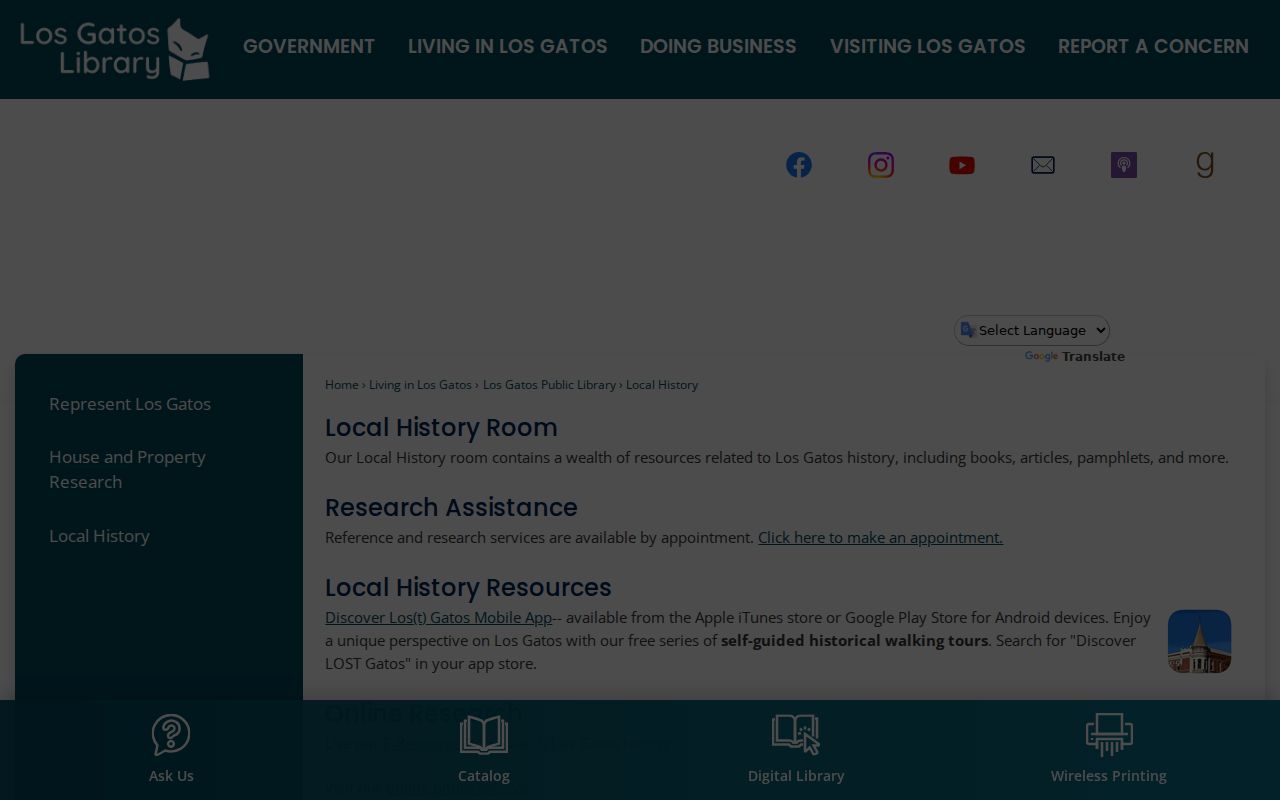
When a printed volume is missing, the staff can help identify a regional substitute or the next useful collection.
Note: Library databases may require a card or in-library use, and physical directory holdings should be confirmed before a research visit.
Why San Jose Volumes Include Los Gatos
Publishers often grouped suburban communities into a San Jose or Santa Clara County volume, which is why a Los Gatos city directory may be shelved under a regional title. History San José holds city directories for San José and selected county communities from 1870-1979. Its reverse address index begins in 1914, and yellow and white telephone pages continue from 1905 through 2018. The Research Library also holds title abstracts, family and biographical files, block books, maps, and organizational papers.
A regional entry needs a place check. Read the town section, street spelling, publisher notes, and surrounding entries. A surname can appear in San Jose, Campbell, Santa Clara, Saratoga, Monte Sereno, and Los Gatos in the same broad volume. Keep the exact community label and address with the citation. That habit prevents a regional directory from being mistaken for a complete incorporated-town list. History Los Gatos is another local-history channel for photographs and collection context.
When the local shelf has a gap, the regional library is a stronger fallback than a generic name search because its collection retains the original directory structure.
Digitized Los Gatos Directories at FamilySearch
FamilySearch Catalog adds a digital route for Santa Clara County record groups, but image access can depend on sign-in, a FamilySearch center, or an affiliate library. One useful regional title is the 1971 “Polk’s San Jose suburban (Santa Clara County, Calif.) city directory,” which includes Campbell, Cupertino, Los Gatos, Monte Sereno, Santa Clara, and Saratoga. The volume is listed at 2,376 pages under identifier 4518408. An earlier regional source is L.L. Paulson’s 1875 handbook and directory, listed at 455 pages.
Search the catalog at county and town level for deeds, probate, marriage, naturalization, cemetery, and directory material. A catalog hit is not the same as an unrestricted page image. Note the collection title, identifier, access condition, and page or film reference. For a person lookup, capture the entry and its page context. For an address lookup, scan the street section and surrounding entries before drawing a conclusion.
The Santa Clara County FamilySearch catalog search provides a way to see which historical record groups may sit behind a local name or street question.
Use the catalog as a finding aid, then verify the image, page, and locality before citing a digitized Los Gatos directory.
Read a Los Gatos City Directory Entry
No unrestricted official digitized Los Gatos entry was available for direct inspection in the research set. The expected fields below come from the documented local and regional directory format and must be checked against the actual volume. Start with the abbreviation page. Then read the surname section and the reverse section together when both exist.
| Name | Surname, given name or initial, and sometimes a spouse in parentheses. |
|---|---|
| Occupation | A period clue that can help distinguish two people with the same name. |
| Home address | House number and street, with the volume’s own shorthand. |
| Business address | A separate contact line that should not be treated as a home. |
| Occupancy mark | An owner or occupant symbol whose meaning must be read from that volume. |
| Reverse entry | Street, number, occupant or telephone subscriber when the reverse section exists. |
- Criss-cross directory
- The street-order half of a directory, arranged by address rather than surname.
- Householder index
- A name-centered finding aid that may point to the head of a household or subscriber.
- Abbreviation key
- The volume’s explanation of marks such as h, r, bds, or wid. Conventions vary.
Copy the entry exactly, including initials, punctuation, symbols, and page number. A mark that looks familiar may have a different meaning in another year. The address line can also reflect a prior number or a regional postal label, so compare it with a map, deed, or APN before treating it as present-day geography.
Decode a Los Gatos Directory’s Short Marks
Short marks carry much of the value in a Los Gatos directory. “Wid” can point to a spouse’s death, “bds” can identify a boarding arrangement, and an occupancy symbol can distinguish a listed household role. Those readings are only valid after the volume’s key is consulted. Do not expand an abbreviation from memory and do not assume every directory used the same owner or occupant mark.
Names also change form. Search initials, middle names, married names, diacritics, compound surnames, and older spelling. California’s 2026 diacritical-mark implementation is a reminder that newer certificates may preserve marks that older indexes dropped. A same-name result needs an address, date, spouse, occupation, or nearby household clue before it joins a family trail.
Note: Photograph or transcribe the abbreviation page before copying entries so later readers can audit the interpretation.
Trace Los Gatos Households Across Directory Years
A directory year can show a household between two census dates, but it should be used as one dated step. Begin with a standardized address or a full name. Follow the person in adjacent volumes, note every move, and then compare the household with deeds, voter evidence, obituaries, and probate. If the name disappears, test a move, death, unlisted entry, publisher gap, or address change before choosing an explanation.
- Choose a directory year and copy the name, address, symbol, page, and abbreviation key.
- Repeat the search in the next available volume, recording each changed street or household member.
- Flip to the reverse section and check the same number for neighboring names or a different spelling.
- Pair the directory interval with the closest federal census and compare household relationships.
- Use newspaper, funeral, probate, deed, or map evidence to explain an ending or move.
The method works for a family history, a past-household question, or a historic address without claiming that every person listed was an owner. The exact directory collection remains the source; the surrounding records provide the check.
Note: Record missing publication years as gaps rather than silently treating the prior entry as continuous.
Pair Los Gatos Directories with the 1950 Census
The 1950 federal census is the latest public population census under the 72-year release rule. Los Gatos households may be indexed under changing township or enumeration geography, so a town-name search is not always enough. Use the street, house number, surname, spouse, child, lodger, birthplace, occupation, and tenure fields together. Then compare a Los Gatos city directory just before or after the census date.
The census can clarify a relationship that a directory compresses. A directory may give a name and address, while a census can show household members, ages, birthplace, and the enumeration-day setting. Neither source is a perfect continuous roster. Transcription errors, boundary shifts, missing volumes, and people away on the date can all create a false gap.
Research habit. Treat the census as an anchor date, not as a replacement for the city directory. Compare the same address and at least one independent household clue.
When the trail extends beyond the public census, library newspapers, family files, and the County Archives finding aids can supply a next record without guessing.
Los Gatos Maps Fill Directory Gaps
Sanborn maps do not name occupants, but they can repair the address side of a city directory search. Local holdings include 1884, 1888, 1891, 1895, 1904, 1908, 1928, and 1944. The Los Gatos house-history guide recommends starting with 1944 or 1928 and working backward because street names and numbers changed. The Library of Congress viewer has the April 1895 twelve-sheet Los Gatos atlas and links to several earlier editions.
Use the map to compare footprint, street name, nearby structures, and land use with the directory address. Then return to the APN, deed, plat, or permit trail. NUMU and History Los Gatos can add photographs, ephemera, captions, or streetscape context when a formal directory does not explain a redevelopment or renumbering. The NUMU collection page shows the research and collection channel.
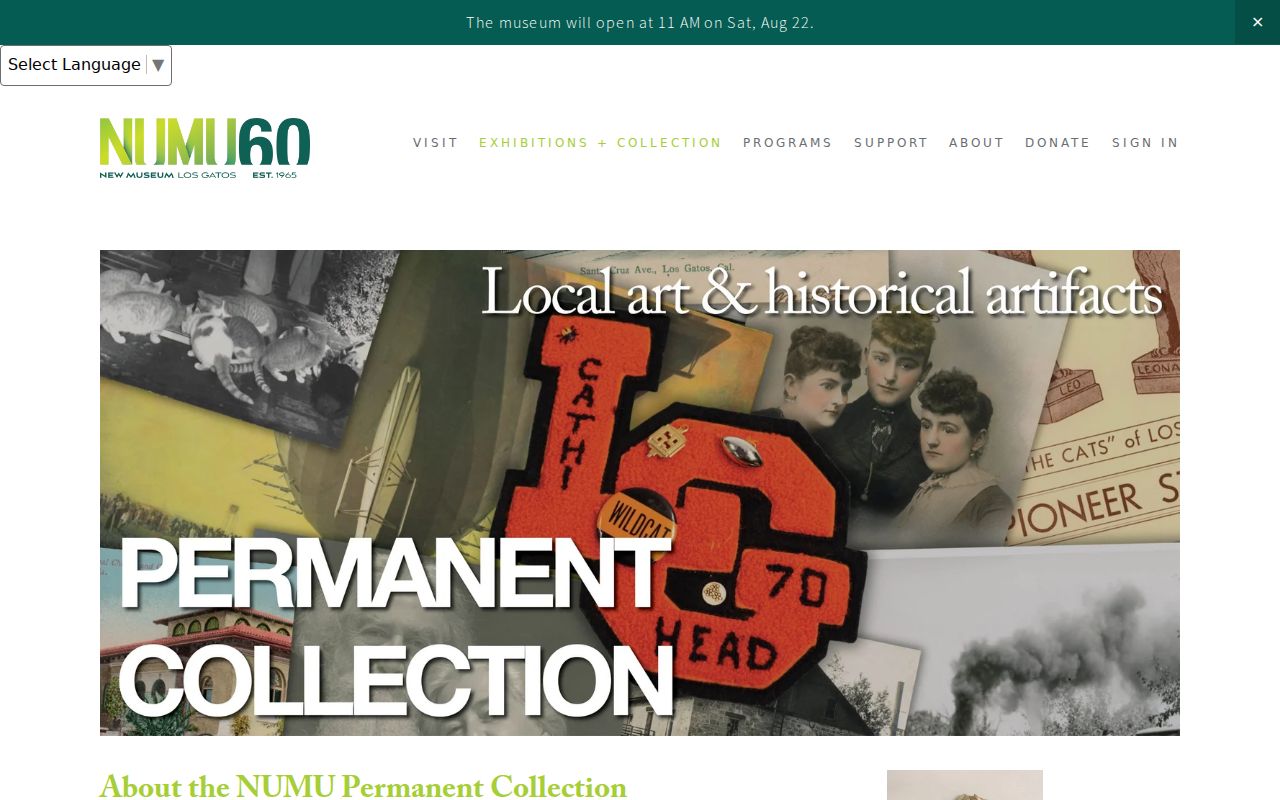
Local images and collection notes can bridge a visual address change, but the date and citation still belong beside the directory entry.
A Los Gatos City Directory Timeline
The record shelf sits inside a longer local history. These milestones show why a Los Gatos city directory search shifts among county, town, library, and archive channels.
- 1850: Santa Clara County enters California’s original county record structure, allowing deed, court, and probate research back to the statehood era.
- 1887: Los Gatos incorporates, while early evidence remains spread across county books, newspapers, maps, churches, cemeteries, and later directories.
- 1870-1979: History San José’s regional directory holdings cover selected Santa Clara County communities, with a reverse address component from 1914.
- 1930-1974: The Los Gatos Library’s documented local Polk and telephone sections provide the core local run, with gaps.
- 1941: The street-organized Tax Assessment Survey adds building clues that need cross-checking.
- 2006: Santa Clara County Archives opens after its 2004 policy and space work, adding indexed county records and finding aids.
The timeline does not fill missing volumes. It tells a researcher which custodian or collection is most likely to hold the next piece. For state-level historical material, the California State Archives catalog is a separate finding aid.